Help! FPV 101

31SamCoMi

Active member
Hi there. I know I have already posted about what FPV gear to get, but I still only know the very basics of it. Could anyone just "spell it out"?
 

Houndpup Rc

Legendary member
Hi there. I know I have already posted about what FPV gear to get, but I still only know the very basics of it. Could anyone just "spell it out"?
Whacha want to know? Like terminology, how everything connects wire for wire, or just basic how everything connects ect. Just ask and I should be able to answer!👍👍
 

31SamCoMi

Active member
Say a bought a regular setup. I want to know how you attatch it to the plane, set the connection up, and anything else after buying and unboxing.
 

LitterBug

Insanely Addicted Techno Geek Legendary Member
Moderator
Say a bought a regular setup. I want to know how you attatch it to the plane, set the connection up, and anything else after buying and unboxing.
That is a very open ended question because it depends on what setup you go with. For a super simple setup you could get an AIO Camera/VTX, hot glue it somewhere on your plane, and run power to it either from your battery or RX.

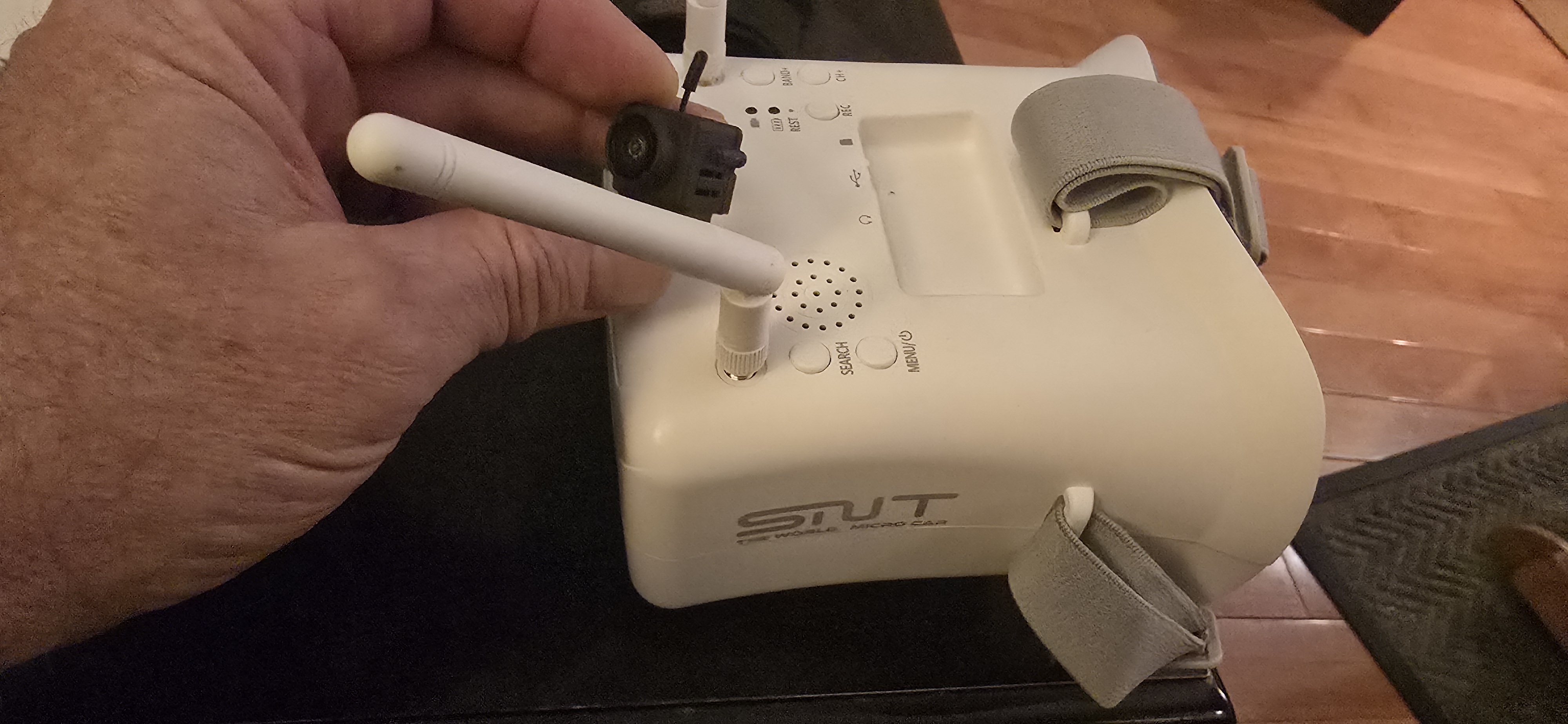
Super basic ground setup would be a pair of recharchable goggles with a built in Video Receiver. The camera sends the video to the transmitter and the signal goes over a 6MHZ bandwith channel in the 5.8ghz wifi band to the receiver in the goggles.

1000012931.jpg
 

LitterBug

Insanely Addicted Techno Geek Legendary Member
Moderator
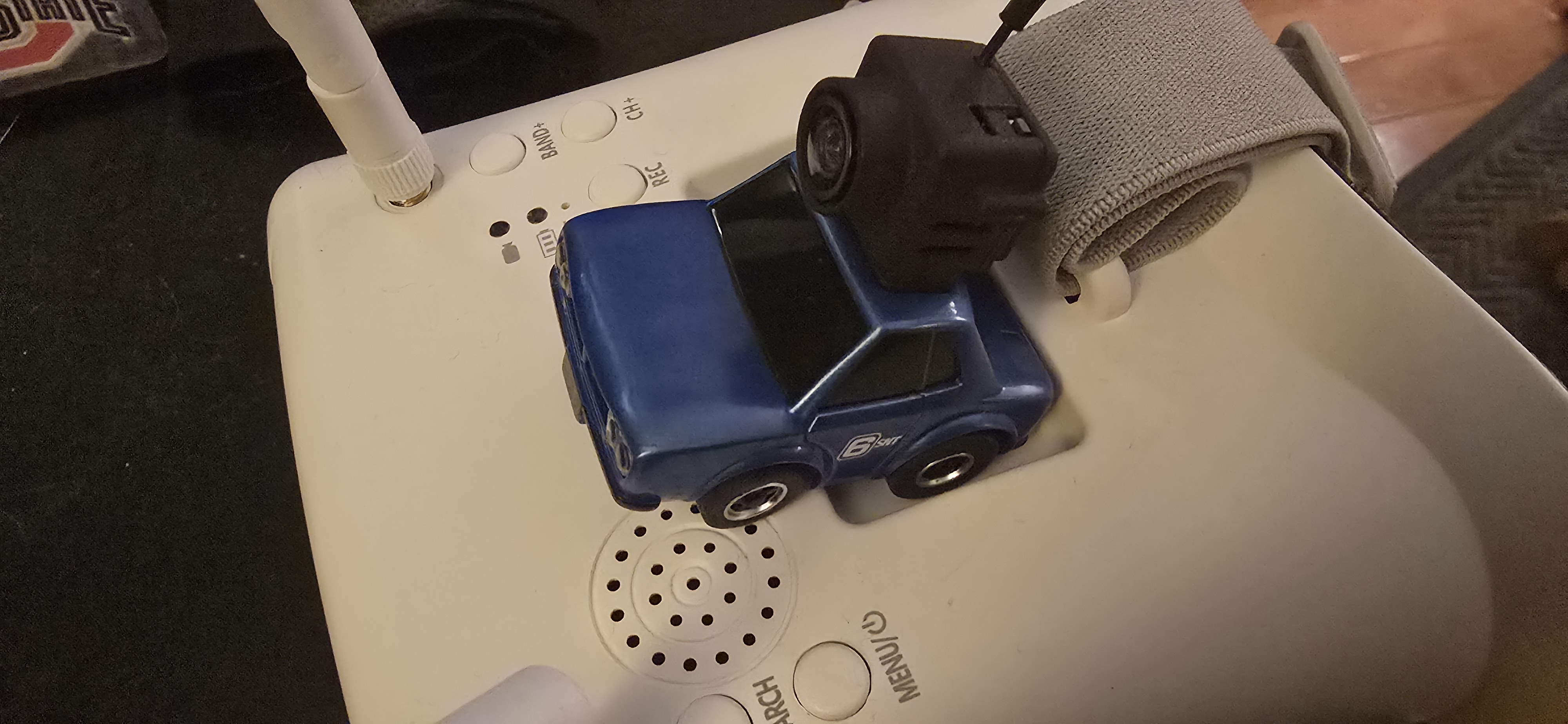
This particular setup came with a micro RC Car package deal.
1000012933.jpg

I can use my other Goggles, receivers and car transmitter, so it all works and plays well with standard Analog FPV gear.
 

LitterBug

Insanely Addicted Techno Geek Legendary Member
Moderator
Air
Camera -> VideoTX -> Antenna -> ~~~~~~~~~~radio waves~~~~~~~~~~

Ground
~~~~~~~~~radio waves~~~~~~~ -> Antenna -> VideoRX -> display/goggles

The majority of FPV gear is NOT FCC certified and requires a HAM radio license to legally use the transmitter gear.
 

LitterBug

Insanely Addicted Techno Geek Legendary Member
Moderator
Like @Houndpup Rc says... It depends. Where are you going to fly? Indoors, Outdoors, open field, flat terrain, hilly terrain, city, out in the middle of nowhere, etc. I don't go over 200mw myself. Most everything above that is wasted power. You are better off getting efficient antennas than dumping power into it. Try using as little as possible power. Make sure you check the channel in your goggles BEFORE powering up the transmitter. If someone else is on the channel, do NOT power up over them.
 

LitterBug

Insanely Addicted Techno Geek Legendary Member
Moderator
Start low power. See how far you go before starting fuzz. Bump it up. see the difference in distance and signal quality. Don't assume more power is better. Learn your location and gear.
 

LitterBug

Insanely Addicted Techno Geek Legendary Member
Moderator
Here's an example of just using hot glue to stick a 10mw VTX, and camera on a FT Tiny trainer. I should have used filtering on the power input, but the TX did very well considering low power. It is one of the very few FCC certified VTXes available.


31SamCoMi

Active member
Start low power. See how far you go before starting fuzz. Bump it up. see the difference in distance and signal quality. Don't assume more power is better. Learn your location and gear.
Would be a good idea to have a spotter and possibly trainer so the other person can take it if your video it getting fuzzy?
 

LitterBug

Insanely Addicted Techno Geek Legendary Member
Moderator
Would be a good idea to have a spotter and possibly trainer so the other person can take it if your video it getting fuzzy?
Absolutely! When first starting out, you may loose orientation too. So if they can talk you back, that is a big help. If they can also take control and fly you back, that is a big help.

The white lines in the video are from noise on the power supplied to the VTX/Camera. The majority of the noise in the video is not due to only using 10mw.
 

LitterBug

Insanely Addicted Techno Geek Legendary Member
Moderator
Another example of a 25mw AIO camera/VTX setup on one of my planes. Again, just hot glued in the designated camera spot of the plane. Many of the AIO cameras have VERY wide angle lenses which makes it difficult to judge Speed, distance, and altitude when starting out.


This is one of my favorite planes for flying FPV, but I don't share much footage due to how nauseating the footage can be.

 

LitterBug

Insanely Addicted Techno Geek Legendary Member
Moderator
What is the range of 25mW and what size planes is it good for?
Again, tough to say depending on where you fly. These examples are mostly in wide open air. If you have metal buildings, HV power lines, trees, hills, etc. Things change. I also prefer a narrower view camera than what is on the AIO cameras when flying outdoors. Indoors, they are great.

It's really about getting gear and finding what works best for you with where and what you fly. We can give you glimpses, but it may not apply to your style or area.
 
Last edited:

LitterBug

Insanely Addicted Techno Geek Legendary Member
Moderator
My Final AIO example is from an indoor fly on a TinyWhoop. Unknown power. Possibly 100mw or 200mw. Doubtfull it's 25mw because I was behind several sets of brick walls and still had signal at times.


Bricks

Legendary member
When first learning to fly FPV try and stay close to where you are, it is way to easy to lose orientation by getting too far away and not recognizing land marks and getting back to the field. From the air everything looks different then what one is used to seeing.