My first build!!!:)

So your battery looks good, but for a sub 250g plane I would go a bit smaller on your motor and the prop is way to big! (I didn't know what size of prop to use on my motor when I started and used a WAY to big one and fried my motor😂) I can get you a list of what size motors I would ruse, but first are you doing a warbird or trainer? (warbirds are usually more twitchy and fast and trainers are slower and more forgiving)
sooo, should I choose a smaller motor?in the motor description, it said for 150-350g planes
edit: just realised, my thingy says "member" now !(which is prob bc I post too much stupid questions lol)
 

Houndpup Rc

Legendary member
sooo, should I choose a smaller motor?in the motor description, it said for 150-350g planes
Yup, but for 3D planes which have a 1:5+ thrust ratio..A trainer only needs 75% of the AUW weight but I like to have extra power on hand so if I have to pull out of a bad move and if you ever want to make any bigger planes..So yeah, it would probably work just fine! (A quad motor has high rpm's and crazy acceleration so that why I said smaller)
 

quorneng

Master member
hellogoose
My guess is you may find it hard to get down to sub 250g using the material, motor and servos of your first plane unless you use a very small battery too.
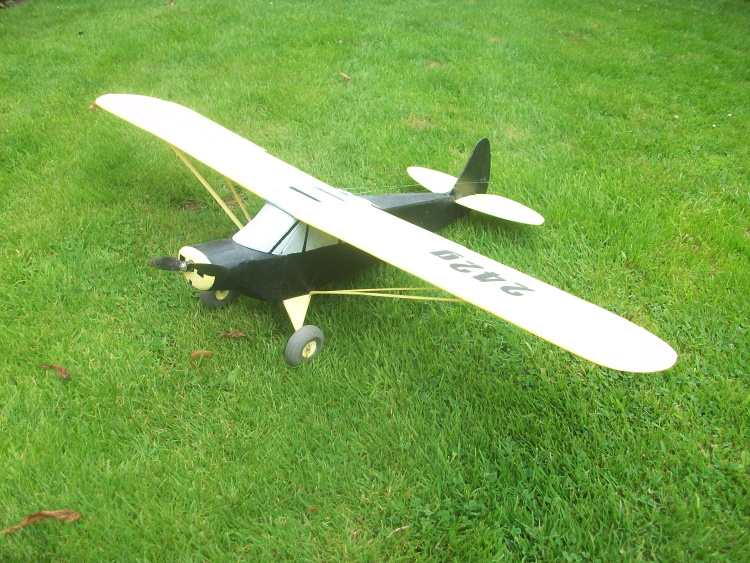
I have built several 'own design' power sub 250g RC foam board planes as well as converted two solid foam chuck gliders to sub 250g power RC.
Something like this but not with the "over the top" true scale features I incorporated.
17JUL20a.JPG

40" span and sub 250g ready to go it still flies very nicely.
You will quickly find that keeping to a reasonable size
and keeping to 250g are conflicting targets. Big(ish) and light is hard to do!
My suggestion is to build a reasonable sized plane, say with at least a 1m (40") span and get it (and you) to fly it well. At this point you will have a plane of a flyable configuration, only then set about the problem of how to make it lighter (it could need as much as a 40% reduction!) and still be practical flyable plane.
If your first build is a very light plane and it doesn't fly properly you won't know if its due to its design, the execution of the build or your flying skills!
Just get to where you want to go using modest logical steps.
I hope this helps.

 

Piotrsko

Legendary member
^^^^ what he said.

very light is also hugely prone to being blown about uncontrolled in light winds. Most here in Reno fly them in Gyms which add several layers of complications.
Once had a friend that was hugely a P-51 fan to the exclusion of sanity. Took him a big bunch of planes learning to halfway fly. I moved and he gave up flying, couldn't afford replacing everything after first flight crash.